When you are staring down multiple debts across credit cards, personal loans, and store accounts, figuring out where to start can feel paralyzing. Should you pay off the smallest balance first for a quick psychological win, or target the highest interest rate to save the most money?
This debate sits at the heart of the two most popular debt elimination strategies: the Debt Avalanche and the Debt Snowball. Choosing the right one depends entirely on whether your priority is strict mathematical efficiency or psychological momentum.
Strategy 1: The Debt Avalanche (Mathematically Optimal)
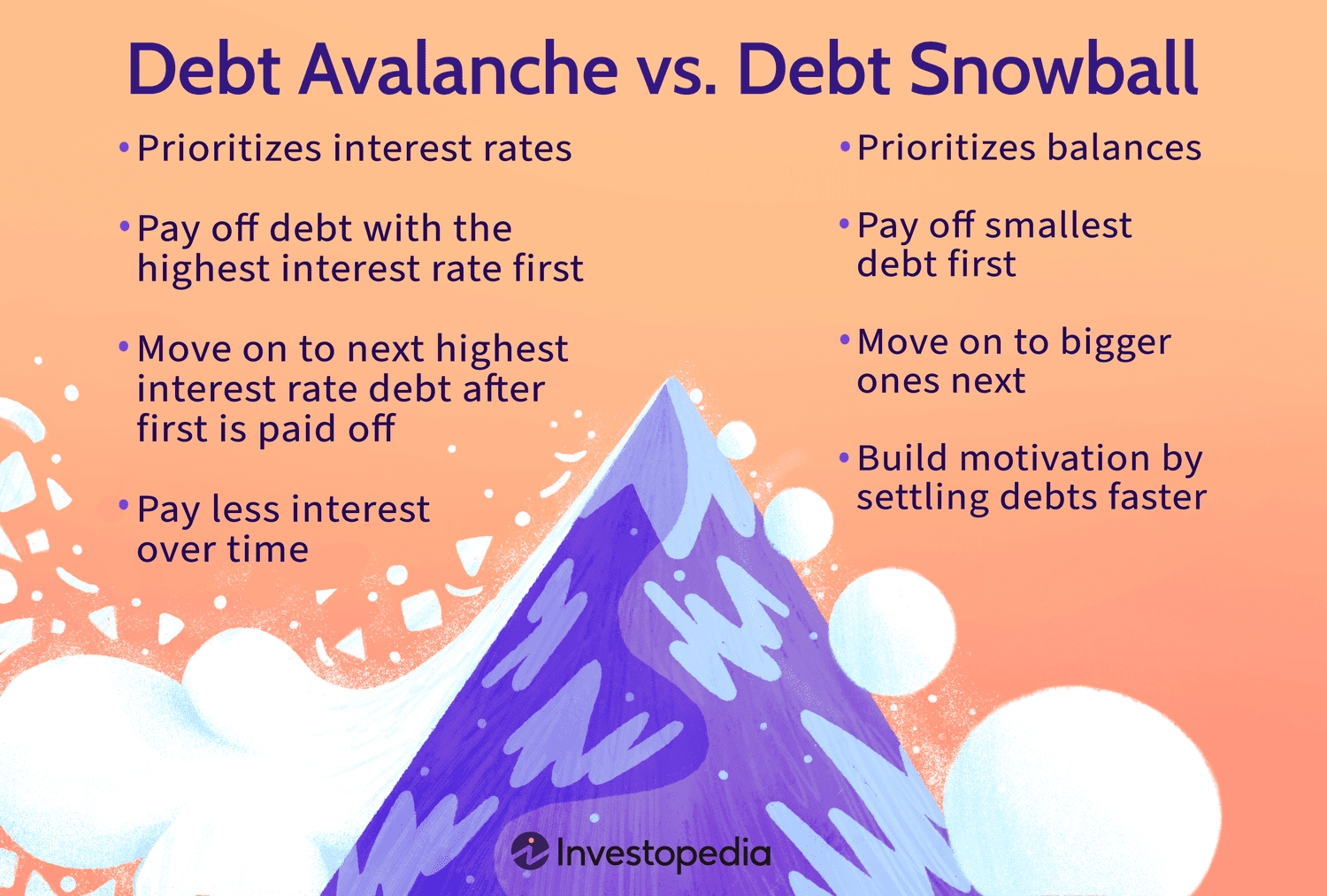
The debt avalanche method focuses on slashing interest charges as quickly as possible. With this approach, you rank all of your debts from the highest interest rate to the lowest.
- Pay the minimum required amount on all of your debts.
- Pour every extra dollar you can scrape together into the debt with the highest APR.
- Once that highest-rate debt is wiped out, roll its payment into the next-highest rate debt (the “avalanche effect”).
Why choose it: It saves you the most money and gets you out of debt in the shortest possible timeframe because you stop bleeding cash to high interest charges.
Strategy 2: The Debt Snowball (Psychologically Motivating)
Popularized by financial expert Dave Ramsey, the debt snowball method focuses on quick behavioral wins. With this approach, you rank your debts from the smallest total balance to the largest, completely ignoring the interest rates.
- Pay the minimum on all of your accounts.
- Throw all extra cash at the smallest balance until it is completely gone.
- Take that entire payment and roll it into the next-smallest balance, creating a compounding “snowball” of cash flow.
Why choose it: Quick wins trigger dopamine and build behavioral momentum, making it much easier for people who feel overwhelmed to stay motivated over the long haul.
Head-to-Head Comparison
| Feature | Debt Avalanche | Debt Snowball |
|---|---|---|
| Primary Focus | Lowest total interest paid | Quickest psychological wins |
| Mathematical Efficiency | Maximum (saves the most money) | Moderate (may cost more in interest over time) |
| Best For | Disciplined savers focused on numbers | People who need quick motivation to stay consistent |
Pro Tip: Neither method works if you continue adding new charges to your credit cards. Pause your card usage entirely while executing your payoff plan.
Final Thoughts
The best debt payoff strategy is the one you will actually stick to. If you are motivated by numbers and saving cash, go with the Avalanche. If you need early wins to keep your head in the game, choose the Snowball. The most important step is simply getting started.
Which method do you prefer? Drop a comment below!